
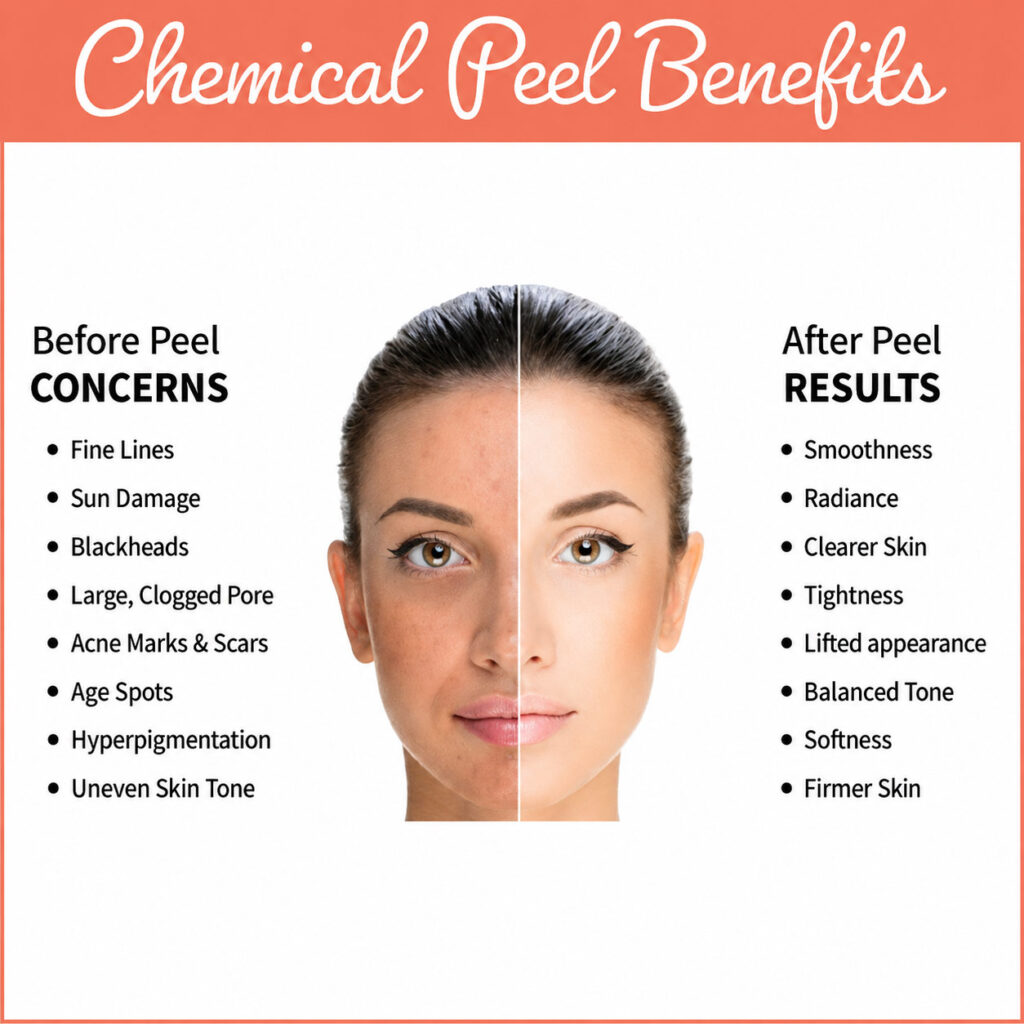
What Are Chemical Peels?
As opposed to a mechanical form of exfoliation, a chemical peel is a treatment in which a specialized chemical solution is applied to the skin to dissolve the bonds between dead skin cells on the surface. This process removes damaged outer layers of skin, revealing healthier, smoother, and more radiant skin underneath.
Chemical peels can effectively improve the appearance of fine lines, wrinkles, superficial scars, acne, and uneven pigmentation while promoting overall skin rejuvenation.
Types of Chemical Peels
Chemical peels contain different types of acids that provide varying depths of penetration and results.
- Jessner's Peel: Contains a blend of acids including Resorcinol, Alpha Hydroxy Acids (AHAs) such as glycolic and lactic acid, and Beta Hydroxy Acids (BHAs) such as salicylic acid.
- TCA Peel (Trichloroacetic Acid): Utilizes a single acid agent that penetrates deeper than most superficial peels.
- Phenol Peel: Uses carbolic acid to provide the deepest level of skin resurfacing and rejuvenation.
Top Benefits for Your Skin
Chemical peels offer a wide range of benefits and can be customized to address specific skin concerns.
- Anti-Aging: Helps reduce the appearance of fine lines and wrinkles by stimulating collagen production and increasing cell turnover.
- Acne Control: Unclogs pores, reduces breakouts, and minimizes acne scarring for a clearer complexion.
- Improved Skin Texture: Smooths rough patches and uneven texture while helping reduce the appearance of enlarged pores.
- Enhanced Product Absorption: Allows serums, moisturizers, and corrective products to penetrate more effectively.
- Even Skin Tone: Helps fade hyperpigmentation, sun damage, and melasma while promoting a brighter complexion.
Understanding Peel Depths
Chemical peels are categorized by their depth of penetration and should be selected based on skin type, sensitivity, and treatment goals.
- Superficial or Light Peels (Jessner's Peel): Target the outermost layer of skin with minimal downtime. Ideal for refreshing dull skin, improving radiance, and addressing mild acne concerns.
- Medium-Depth Peels (Jessner's/TCA): Penetrate deeper into the skin and are effective for moderate wrinkles, pigmentation concerns, and more significant acne breakouts. Peeling may last approximately one week.
- Deep Peels (Phenol): Designed for severe sun damage, deep wrinkles, and significant scarring. These treatments require physician supervision and involve extended recovery periods.
There are several methods used when applying chemical peels, depending on the formulation selected.
- Standard Application: The practitioner applies the peel solution in layers and removes it after a designated period, typically between 5 and 30 minutes.
- Self-Neutralizing Peel: The peel remains on the skin for several hours and is removed by the client at home. These formulations naturally stop penetrating after a specified timeframe.
Your practitioner will explain the appropriate treatment method and provide detailed aftercare instructions based on the peel selected.
Pre-Peel Preparation
Proper preparation helps maximize results and reduce the risk of irritation.
- Consult a Professional: Ensure the selected peel is appropriate for your skin type and goals.
- Pause Certain Skincare Products: Avoid products containing retinoids, AHAs, or BHAs for 3 to 5 days before treatment.
- Practice Sun Protection: Avoid excessive sun exposure and wear SPF daily for at least two weeks before treatment.
- Stay Hydrated: Keep your skin well-moisturized in the days leading up to your appointment.
What to Expect During and After Treatment
- During Treatment: Most clients experience mild warmth or tingling. Deeper peels may create a stronger sensation for a short period.
- After Treatment: Avoid picking or peeling flaking skin, as this may lead to irritation or scarring.
- Skincare Routine: Use gentle cleansers, fragrance-free moisturizers, and daily sunscreen to protect the newly revealed skin.
- Aftercare Kits: Many clinics offer specialized post-treatment kits to support healing and optimize results.
Approximate Costs
Pricing varies based on the peel type, practitioner expertise, and geographic location.
- Light Peels: Approximately $150 to $300
- Medium-Depth Peels: Approximately $200 to $500
- Deep Peels: Approximately $1,500 to $2,500 or more
Choose Wisely
While chemical peels are available online and through retail channels, professional consultation is strongly recommended before undergoing treatment. Improper use can result in temporary or permanent skin damage that may be difficult to correct.
When performed by a qualified skincare professional, chemical peels can provide significant long-term benefits, helping maintain smoother, clearer, and more youthful-looking skin. Regular treatments support healthy cell turnover, improve overall skin quality, and complement a comprehensive skincare routine.
At Optimal Health and Wellness Center, our licensed skincare professionals can evaluate your skin and recommend the most appropriate treatment options for your unique concerns and goals.
Call 602-OPTIMAL to schedule your consultation or book your appointment online today.